TABLE OF CONTENTS
Configure COD module
Before employees can submit COD receipts, set up who may request them, which purchase types are allowed, and which cards or reimbursement accounts they use.
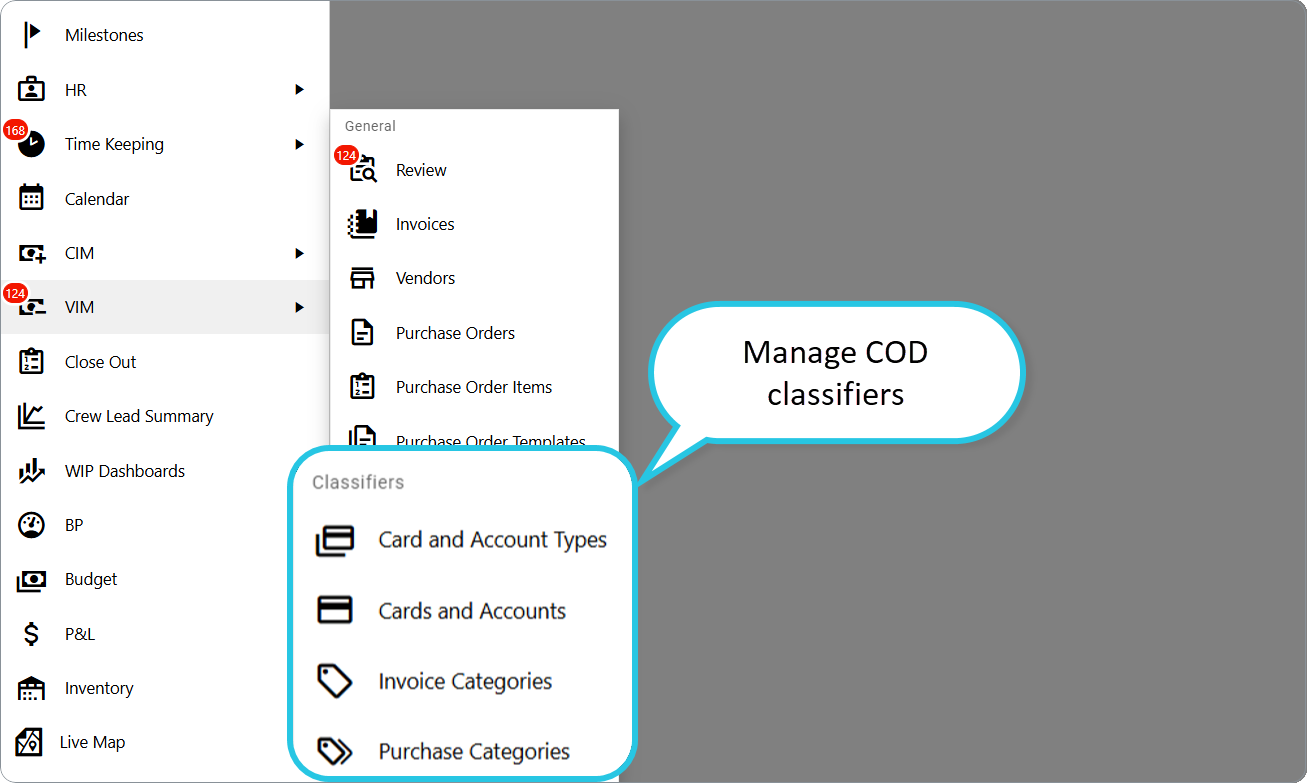
You configure COD mainly in the web portal under VIM → Classifiers.
1. Allow COD in the mobile app
On the employee card, assign the role Mobile. Allow COD Requests.
Without that role, the employee does not get the Purchases / COD request flow in the app.
2. Check Build Plan availability (app)
In the app, the employee can only pick certain Build Plans for a COD.
Rules: What Determines the BPs a User Can Select for a COD in the App?
3. Who can manage COD classifiers (web)
Open VIM → Classifiers. These pages are available to Accountant and Project Library Manager roles:
Classifier | Purpose |
|---|---|
Purchase Categories | Types of COD purchases and default accounting values |
Card and Account Types | Which categories a card type allows, and how invoices sync |
Cards and Accounts | Actual cards / reimbursement accounts employees select |
4. Purchase Categories
Path: VIM → Purchase Categories
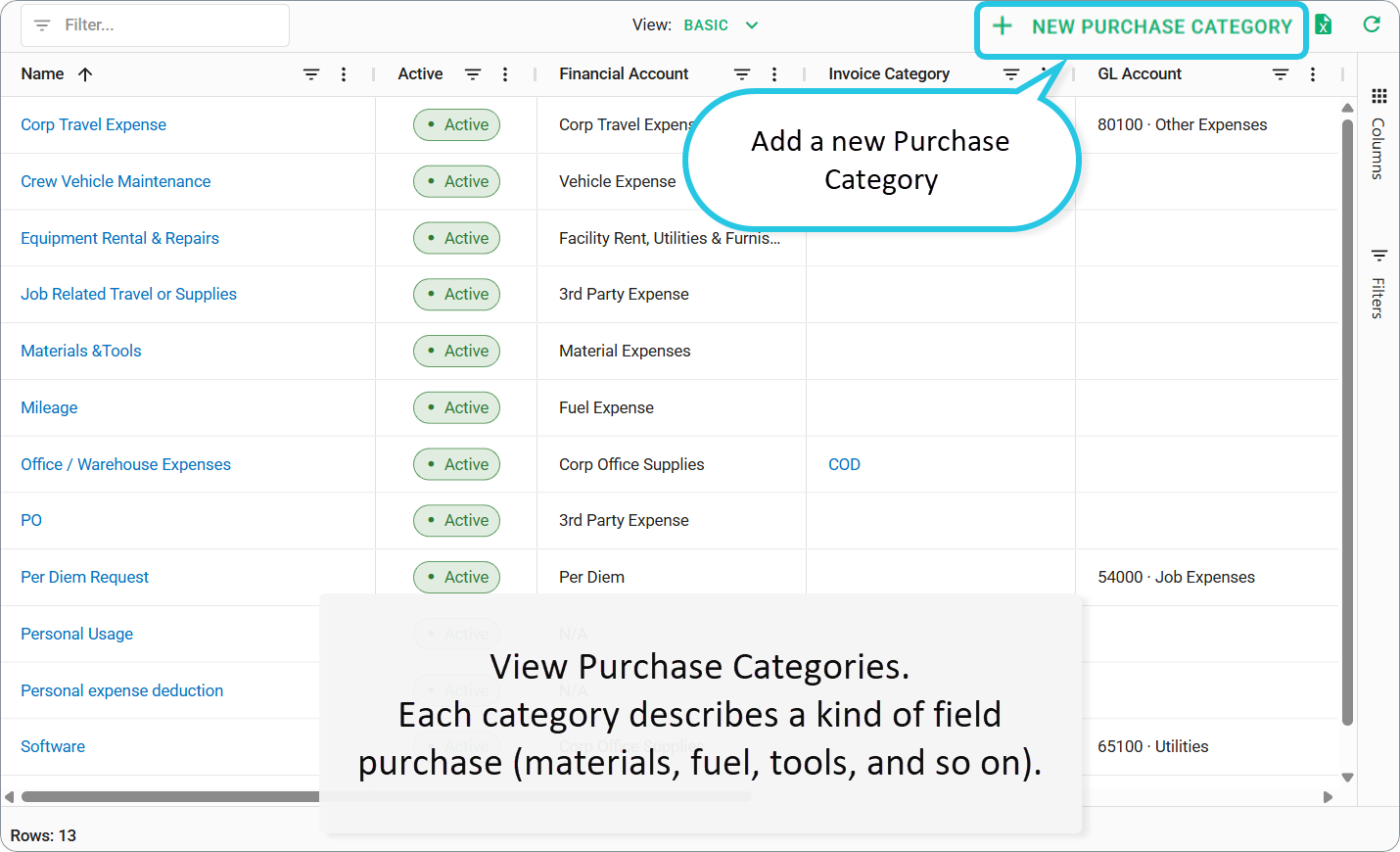
Each category describes a kind of field purchase (materials, fuel, tools, and so on). When someone creates a COD, they pick a category; Fieldclix uses its defaults on the Vendor Invoice.
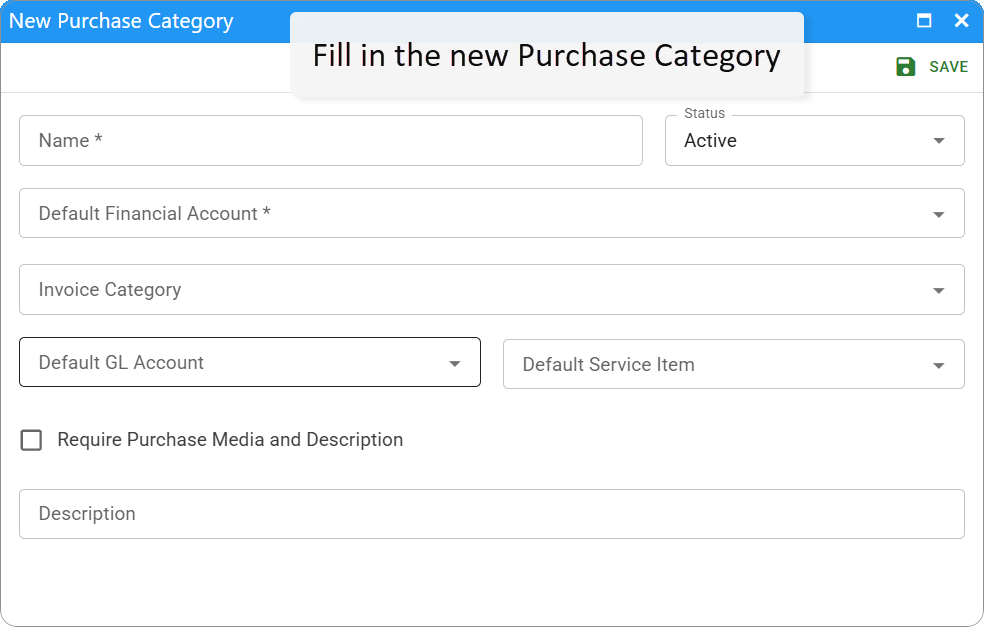
Field | What it does |
|---|---|
Name | Label shown in mobile and web. |
Status | Active — available for new CODs. Closed — hidden from new requests. |
Default Financial Account | Required. Default FA for the COD invoice allocation. |
Invoice Category | Optional. Default VIM invoice category when the COD invoice is created (drives distribution and approval rules for that bill). |
Default GL Account | Optional. Default GL on the invoice expense line. |
Default Service Item | Optional. Default service item on the invoice line when your company uses service items in VIM. |
Require Purchase Media and Description | When checked, the employee must add receipt media and a description before submit (mobile and office create). |
Description | Optional notes for admins. |
Important: A COD is always created as a Vendor Invoice. You no longer configure “transform to invoice” or “skip financial distribution” on the category. Budget impact follows the invoice allocation / validation path like other vendor bills.
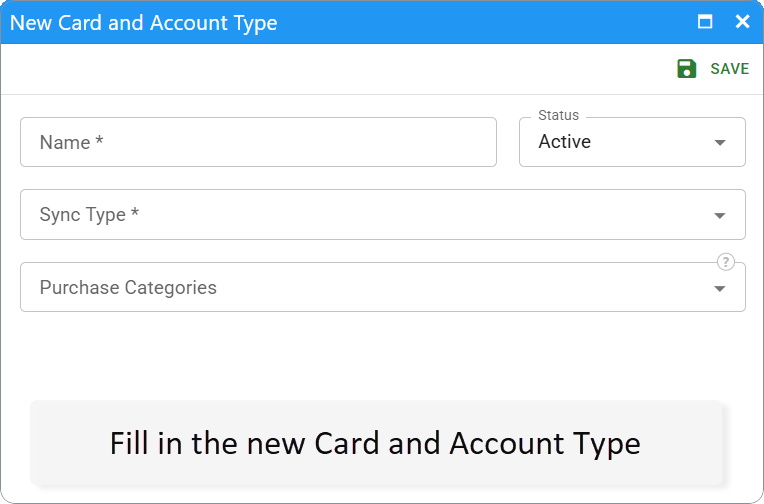
5. Card and Account Types
Path: VIM → Card and Account Types
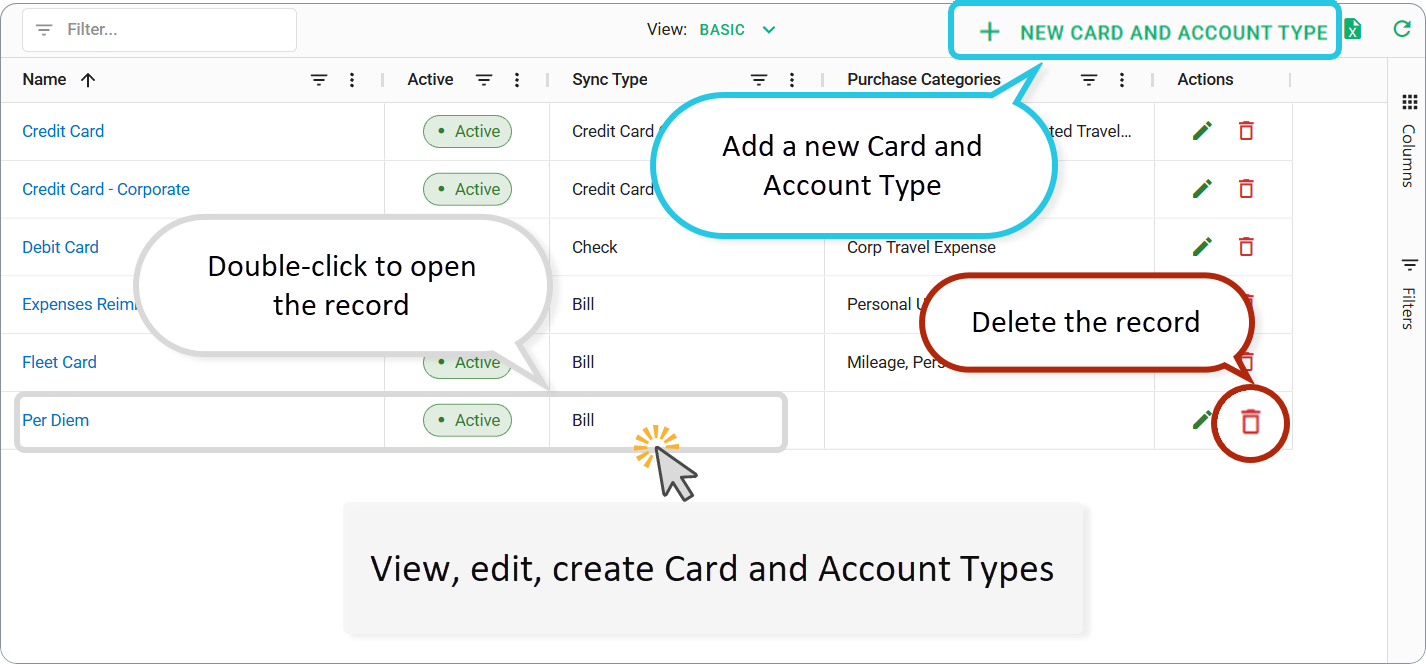
Use a type to group similar cards (for example company Visa, employee reimbursement, field check) and to decide how COD invoices sync.
Field | What it does |
|---|---|
Name | Label of the type. |
Status | Active / Closed. |
Sync Type | Required. How invoices for cards of this type sync to accounting: Bill, Credit Card Charge, or Check. |
Purchase Categories | Which purchase categories employees may choose when they pick a card of this type. |
Sync Type in plain language
Sync Type | Typical use |
|---|---|
Credit Card Charge | Company card purchases. After approval and sync, the invoice can be treated as paid in Fieldclix. |
Check | Reimbursements or payments that should not go out as a credit card charge. |
Bill | Sync as a regular vendor bill when that matches your AP process. |
On an existing type, you can update the Sync Type on unsynced invoices that already use cards of this type (action next to Sync Type on the type card). Already synced invoices are not changed.
Accounting mapping details: Field Mapping QuickBooks.
6. Cards and Accounts
Path: VIM → Cards and Accounts
This is the list employees pick from when they create a COD (Card And Account).
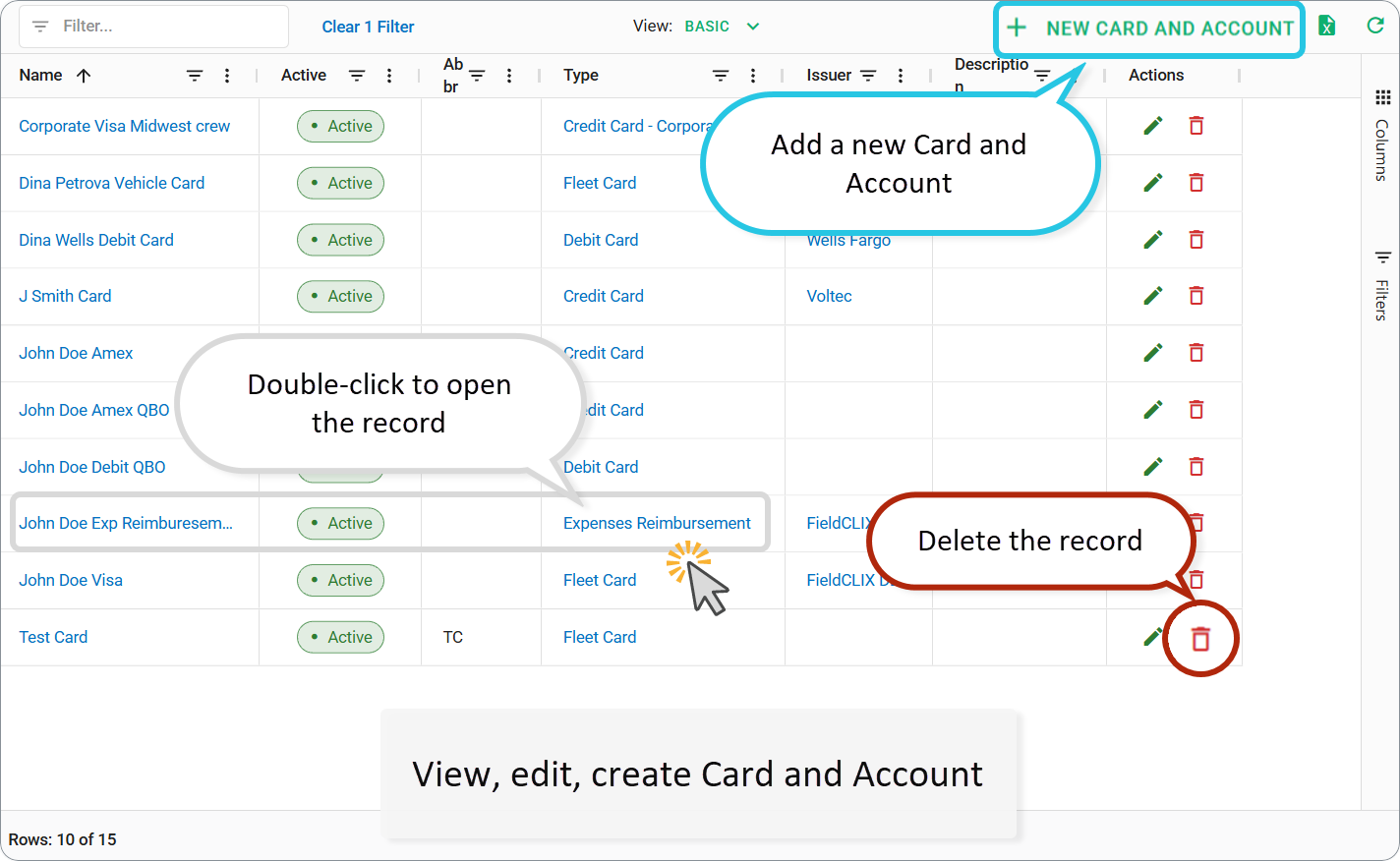
Create a card
Open VIM → Cards and Accounts.
Create a new record.
Fill in:
Field | What it does |
|---|---|
Name | Display name (often includes the employee or card nickname). |
Status | Active / Closed. |
Card and Account Type | Required. Controls allowed purchase categories and Sync Type. |
Abbr | Optional short code. Your company may use name or abbr in COD invoice numbering templates. |
Issuer | Vendor used on the COD invoice (often the employee-as-vendor or card issuer in QuickBooks). Can be changed later on the invoice. |
GL Account | Optional GL linked to this card/account for accounting. |
Holder or Responsible | Required. One or more employees responsible for the card. |
Description | Optional notes. |
If you create a COD → Vendor Invoice, the Vendor on the bill comes from Issuer, not from the store name typed on the receipt.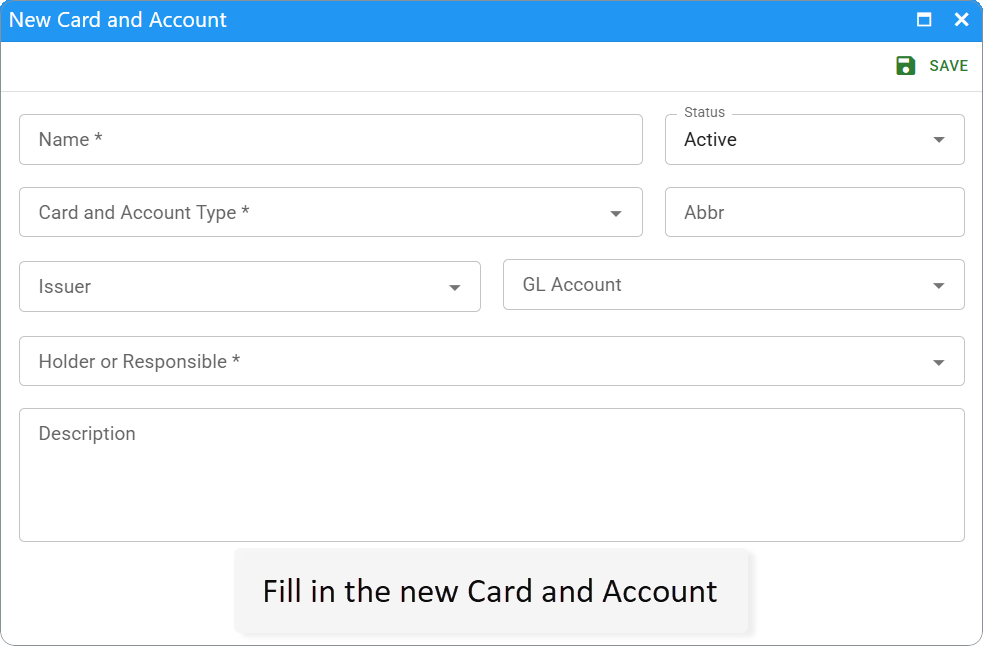
7. Quick checklist before go-live
Assign Mobile. Allow COD Requests to field employees who will submit receipts.
Create Purchase Categories with Default Financial Account (and Invoice Category / GL / Service Item as needed).
Create Card and Account Types with the right Sync Type and allowed Purchase Categories.
Create Cards and Accounts with Issuer and Holder or Responsible.
Test: mobile COD and web VIM → Invoices → NEW COD both create a Draft Vendor Invoice with COD Info filled.
FAQ
Q: Where did “Transform to VIM Invoice” go on the purchase category?
A: New CODs are always Vendor Invoices. You do not flip a transform switch anymore.
Q: Where do I set the invoice category for COD?
A: On the Purchase Category (Invoice Category), not on the Card and Account Type.
Q: Can Project Library Managers change purchase categories?
A: Yes on the web. Accountant and Project Library Manager can manage Purchase Categories, Card and Account Types, and Cards and Accounts under VIM → Classifiers.
Q: Why doesn’t an employee see any cards in the app?
A: Check that Cards are Active, the employee is listed under Holder or Responsible when your process requires it, and the card type includes the purchase categories you expect.
Q: Do I still need desktop Quick Launch for COD setup?
A: Day-to-day setup is on web VIM → Classifiers.
Was this article helpful?
That’s Great!
Thank you for your feedback
Sorry! We couldn't be helpful
Thank you for your feedback
Feedback sent
We appreciate your effort and will try to fix the article